
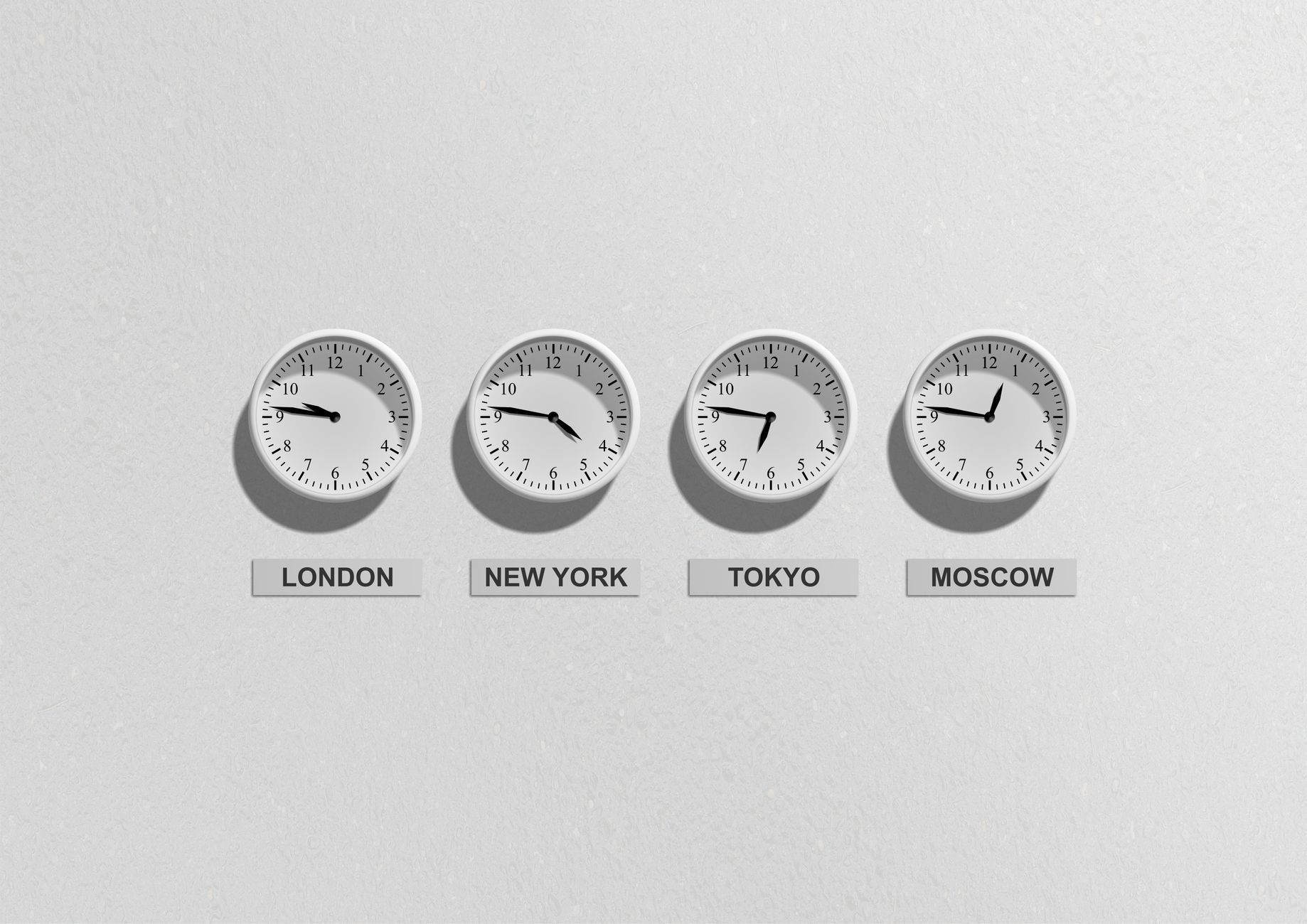
If you run a US business and want remote help that works when you do, Latin America is the obvious place to look. But Colombia, Mexico and Argentina sit in different time zones, and two of the three do not change their clocks when the US does. The right country depends on where your office is, which hours you need covered, and how much the difference shifts between March and November.
What time is it in each country?
Here are the basics, based on current official time rules:
- Colombia uses UTC-5 all year. It does not observe daylight saving time.
- Mexico ended daylight saving time for most of the country in 2022. Mexico City and most of central Mexico use UTC-6 all year. There are exceptions: Quintana Roo (including Cancún) uses UTC-5, Sonora uses UTC-7, and many municipalities along the US border still change their clocks to match their US neighbors.
- Argentina uses UTC-3 all year, with no daylight saving time.
The US, by contrast, moves its clocks forward on the second Sunday in March and back on the first Sunday in November. That means the gap between your office and your remote professional changes twice a year, even though their clock never moves.
How does each country line up with US time zones?

The table below shows how many hours each location is ahead of (+) or behind (-) each US time zone. "Winter" means US standard time (November to March). "Summer" means US daylight time (March to November).
| US time zone | Colombia (winter / summer) | Mexico City (winter / summer) | Buenos Aires (winter / summer) |
|---|---|---|---|
| Eastern | 0 / -1 | -1 / -2 | +2 / +1 |
| Central | +1 / 0 | 0 / -1 | +3 / +2 |
| Mountain | +2 / +1 | +1 / 0 | +4 / +3 |
| Pacific | +3 / +2 | +2 / +1 | +5 / +4 |
A few practical readings of that table:
- A New York office starting at 9 a.m. in January is starting at 9 a.m. in Bogotá. In July, it is 8 a.m. in Bogotá.
- A Dallas or Chicago office shares the clock with Mexico City for the winter months. In summer, Mexico City is an hour behind.
- A Los Angeles office opening at 8 a.m. in winter is opening at 1 p.m. in Buenos Aires.
Which country fits which kind of business?
East Coast and Central businesses get near-perfect overlap with Colombia and Mexico. A receptionist in Medellín or a dispatcher in Guadalajara can work your exact hours without starting early or staying late. Argentina works too, but your professional will be finishing their day as your afternoon winds down, so plan which hours matter most.
Mountain and Pacific businesses often do best with Mexico, which is only one or two hours ahead of the West Coast. Colombia is workable. Argentina is possible, but covering a full Pacific-time day means your hire works into their evening. Some professionals are glad to do that. Others are not, and it is fair to ask directly in the interview.
Businesses that need early-morning coverage, such as a roofing company taking calls at 7 a.m. Eastern, can use Argentina's head start. A professional in Buenos Aires can cover your early hours during their normal morning.
Time zone overlap tells you who can work your hours. It does not tell you who will do the job well, so treat it as a filter, not a decision.
What about the twice-a-year shift?
This is the detail most US owners miss. Because Colombia, most of Mexico and Argentina keep the same clock all year, your remote professional's local start time moves by an hour in March and again in November.
Decide in advance how to handle it:
- Anchor to your time. The professional always works 9 to 5 in your time zone, and their local hours shift. This is usually the right choice for phone coverage, scheduling and dispatch.
- Anchor to their time. Their local hours stay fixed, and your coverage shifts. This can work for bookkeeping or back-office tasks with flexible deadlines.
Put the choice in writing and set calendar reminders for both change dates. Shared calendar tools that display both time zones help prevent missed meetings.
What else should you consider beyond the clock?
Public holidays. Each country has its own national holidays, and they differ from the US calendar. Colombia, for example, moves many of its holidays to Monday, which creates several long weekends a year. Ask your hire for their holiday calendar on day one and agree on which days are off and how coverage works.
Backup plans. Ask about a reliable internet connection, a backup connection such as mobile data, and a quiet place to take calls. These questions apply in any country.
Pay expectations. Pay varies by role, experience and country. As a general market range, many Latin American support roles fall roughly between $6 and $12 an hour, with specialized roles such as bookkeeping or medical billing often higher. Treat these as typical ranges, not quotes.
Contractor paperwork. Foreign contractors usually give US clients a W-8BEN form instead of a W-9, which documents that they are not US persons for tax purposes. Confirm the details for your situation with your accountant.
When is Latin America not the right fit?
If you need overnight coverage, such as after-hours answering for a medical practice or support for customers in Asia, a Latin American hire would be working through their night. In that case, a professional in the Philippines, whose daytime overlaps with US nights, may be a better match.
The bottom line
Colombia and Mexico give East and Central businesses almost the same clock. Mexico suits the West Coast well. Argentina offers an early start and still covers most of the US morning. Choose the country that fits the hours you need covered, plan for the March and November shifts, and then focus on what matters most: skills, English and reliability. If you want help finding that person, RemoteVetted runs a tailored search for your role in the time zone that fits your schedule.